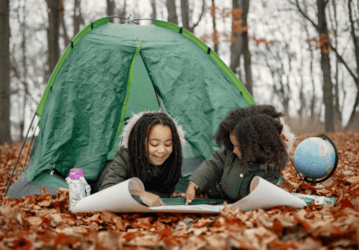
Environmental science used to live behind two barriers: a university paywall and a lab coat. If you wanted to understand marine ecosystems, climate systems, or conservation biology in any meaningful depth, you either enrolled in a degree programme or you relied on whatever a documentary chose to show you. Both barriers are dissolving. Open-access journals, citizen science platforms, and independent educational websites have created a parallel ecosystem for environmental learning that’s accessible to anyone with an internet connection and genuine curiosity. Open-Access Journals and Databases The open-access movement has transformed how scientific research reaches the public. Platforms like PLOS ONE, the Directory of Open Access Journals (DOAJ), and preprint servers like EarthArXiv publish peer-reviewed environmental research without subscription fees. This matters beyond academia. Conservation nonprofits, policy advocates, journalists, and self-directed learners all benefit from free access to primary research. When a study on ocean acidification or deforestation rates is paywalled, the people who most need to act on it often can’t read it. Open access fixes that. Quick Summary: If you want to read actual research rather than summaries of research, start with PLOS ONE and work outward. Citizen Science as Education Citizen science projects — where members of the public contribute observations to real research — have become one of the most effective environmental education tools available. Not because they teach you facts, but because they teach you how to observe. Platforms worth exploring: iNaturalist — photograph plants and animals, get AI-assisted identification, contribute to biodiversity databases used by real researchers eBird — log bird sightings that feed into Cornell Lab of Ornithology research Globe Observer — NASA-backed programme collecting environmental observations (clouds, land cover, mosquito habitats) Reef Check — volunteer-based monitoring of coral reef health The educational value here is participatory. You learn by doing — by walking into a forest and actually identifying what you see, rather than reading about identification in a textbook. Independent Blogs and Educational Websites Between academic journals and mainstream media, there’s a growing layer of independent websites dedicated to making environmental science understandable without oversimplifying it. Sites focused on nature, science, and environmental discovery occupy this space well — translating complex ecological topics into accessible content for non-specialists while maintaining scientific accuracy. This kind of resource fills a gap that neither university courses nor news articles fully address: ongoing, detailed, approachable environmental education for curious adults who aren’t pursuing a degree. The best of these sites combine primary source references with original analysis, which gives readers both the accessible explanation and the tools to dig deeper. MOOCs and Structured Online Learning For people who prefer a structured path, several platforms offer quality environmental science courses at no cost: Coursera — partnerships with universities like Yale (“The Age of Sustainable Development”), University of Cape Town (“Climate Change”), and Stanford (various environmental policy courses). Free to audit. edX — similar range, with strong offerings from MIT and the University of British Columbia on ecology and conservation. FutureLearn — shorter courses from UK universities, often 4-6 weeks, with active discussion forums. The advantage of MOOCs over self-directed reading is structure. Someone has designed a learning sequence for you. The disadvantage is pacing — if you fall behind, the cohort moves on without you. Building Your Own Curriculum The most effective environmental education in 2026 probably isn’t any single resource. It’s a combination: Foundation: One structured MOOC to build baseline knowledge Ongoing learning: Follow 2-3 independent science sites or blogs for current topics Active participation: Join one citizen science project relevant to your local environment Primary sources: Bookmark PLOS ONE and check it monthly for topics you care about This approach gives you breadth, depth, currency, and engagement — without tuition fees. You can also double down by reading our guide to effective note taking.

How to Build a Self-Study Plan That Gets Results
Quick Summary: Define a specific goal, assess your starting point, curate resources, build a realistic schedule, track progress weekly, and adjust based on feedback. Self-study fails when it lacks structure — this framework provides it. Self-directed learning is one of the most valuable skills in the modern economy. LinkedIn’s 2024 Workplace Learning Report found that 85% of professionals consider self-directed learning essential for career growth. Yet without the scaffolding of a formal program (syllabi, deadlines, instructors) most self-study attempts fizzle within weeks. The difference between people who successfully teach themselves new skills and those who abandon the effort almost always comes down to planning. Here’s a six-step framework for building a self-study plan that produces measurable results. Step 1: Define a Specific, Measurable Goal “Learn Python” is not a goal, it’s a direction. “Build a web scraping tool that collects pricing data from three e-commerce sites by March 30” is a goal. Specificity forces you to determine what competencies you actually need and creates a clear finish line. The SMART framework (Specific, Measurable, Achievable, Relevant, Time-bound) remains the most reliable goal-setting method because it transforms vague intentions into concrete targets. Write your goal down and post it where you’ll see it daily. Research by Dr. Gail Matthews at Dominican University found that people who write down goals are 42% more likely to achieve them. Step 2: Assess Your Current Level Honest self-assessment prevents two common mistakes: starting too advanced (which causes frustration and dropout) or starting too basic (which wastes time and kills motivation). Take a placement test if one exists for your subject. Review a syllabus from a relevant course and identify which topics you already understand versus which are completely new. Map your knowledge on a simple three-tier scale: comfortable, familiar but shaky, and completely unknown. Focus your study time heavily on the second and third tiers. Step 3: Curate Your Resources Resource overload is a real problem. The internet offers thousands of courses, books, tutorials, and guides on virtually any topic. Spending weeks evaluating options is itself a form of procrastination. Limit yourself to 2–3 primary resources: one structured course or textbook (the backbone), one reference resource for deeper dives, and one practice-oriented resource (exercises, projects, problem sets). Sources like MIT OpenCourseWare, Khan Academy, and university reading lists provide curated, expert-vetted starting points. Reddit communities dedicated to specific skills (r/learnprogramming, r/languagelearning, r/datascience) often maintain resource guides ranked by community experience. Step 4: Create a Realistic Schedule Break your goal into weekly milestones. If your goal spans 12 weeks, determine what you should know or have completed by the end of each week. Then schedule specific study sessions (day, time, duration) into your calendar. Research on implementation intentions by Peter Gollwitzer at NYU found that specifying when, where, and how you’ll perform a behavior doubles the likelihood of follow-through. Be conservative with time estimates. Beginners consistently underestimate how long new material takes to absorb. Plan for 70% of your available time, leaving a 30% buffer for review, unexpected difficulty, and life interruptions. Step 5: Track Progress Weekly Every Sunday (or whichever day works), spend 15 minutes reviewing the week. What did you complete? What fell behind? Why? Adjust the coming week’s plan accordingly. This isn’t busywork, it’s the feedback loop that separates intentional learning from aimless consumption. Use a simple spreadsheet or journal with three columns: planned, completed, and notes. Over time, patterns emerge; you might discover that morning sessions are twice as productive as evening ones, or that video content works better for certain topics than reading. Step 6: Adjust Without Guilt No plan survives contact with reality perfectly. Some weeks you’ll fall behind. Severaresources will turn out to be poorly suited. Some topics will take three times longer than expected. This is normal. The plan is a navigation tool, not a rigid contract. Adjust timelines, swap resources, and revise milestones based on what you’re actually experiencing, but don’t abandon the plan entirely just because one week didn’t go as expected. Tools That Help Notion or Trello for organizing resources and tracking milestones. Toggl for time tracking study sessions. Anki for spaced repetition flashcards (particularly powerful for language learning, medical studies, and memorization-heavy subjects). Google Calendar for scheduling with reminders. A plain notebook for weekly reflections; sometimes analog tools enforce focus better than digital alternatives. Common Pitfalls to Avoid Tutorial hell; endlessly watching courses without applying knowledge is the most common failure mode. Build something, solve problems, or teach others as early as possible. Perfectionism kills momentum; a 70% complete project teaches more than a 100% complete tutorial. And comparison with others is pointless; everyone starts from a different baseline and learns at a different pace. Compete only with your own previous week. Additional Reading How environmental education impacts open access resources Tested and proven methods for effective note taking

Education Guide: Everything Students Need to Know About Studying in Turkey
A reliable education guide is essential for anyone planning their academic journey in Turkey. Students and parents search for trustworthy information on school systems, university options, academic pathways, scholarships and admission requirements. Whether you are a Turkish student preparing for national exams or an international student planning to study in Turkey, this comprehensive education guide will help you understand every step clearly. The goal is to provide updated, practical and easy to follow information so you can make confident decisions about your future. Turkey has become one of the most dynamic education hubs in the region. With a young population, rapidly growing universities, internationally recognized programs and campuses located in cities such as Istanbul, Ankara, Izmir, Antalya and Bursa, the country offers strong opportunities for academic and professional growth. As competition increases and new pathways develop, having a detailed education guide becomes more important than ever. This article explains how the Turkish education system works from primary school to university. It also highlights admission processes, scholarship options, international student requirements, popular fields of study and the future of education in Turkey. If you plan to build your academic future here, this guide gives you everything you need to start with clarity. Understanding the Education System in Turkey The Turkish education system is organized in stages that cover early childhood, primary education, secondary school and higher education. Each level prepares students for academic advancement and professional pathways. Primary and Lower Secondary Education Primary school in Turkey begins at grade one and continues until grade eight. Students focus on core subjects including mathematics science Turkish language social studies and foreign languages. Schools also offer arts physical education and technology courses to support balanced development. During lower secondary years students begin exploring potential academic interests. Many families look for an education guide to better understand the transition toward high school and exam preparation. Upper Secondary Education High school in Turkey lasts four years. Students choose between general high schools, science high schools, Anatolian high schools, vocational schools and private or international institutions. Each type offers different academic strengths. General and Anatolian high schools prepare students for national university exams. Science high schools focus heavily on mathematics, engineering and natural sciences for students aiming at top universities. Vocational high schools prepare students for professional careers with hands on training. University Education in Turkey Turkey has more than two hundred public and private universities offering bachelor, master and doctoral programs. Many universities participate in international exchange programs such as Erasmus, Mevlana and bilateral partnerships. As part of this education guide it is important to note that Turkish universities are known for strong engineering, health sciences, business, architecture and humanities programs. Higher Education Structure in Turkey Understanding the structure of higher education helps students choose the right academic path. Bachelor Programs Bachelor degrees usually take four years to complete. Medicine, dentistry and veterinary programs require longer, typically between five and six years. Some programs begin with a preparatory year for English language training. Master Programs Master programs take one to two years depending on whether the student chooses a thesis or non thesis path. Thesis programs focus on academic research while non thesis programs prepare students for professional careers. Doctoral Programs Doctoral studies require advanced research and take three to five years. Turkey has strong PhD programs in social sciences, engineering, medicine and education. Distance Education and Online Learning The pandemic accelerated digital transformation and many universities now offer blended or fully online programs. This makes educational access easier for working professionals and international students who need flexible schedules. Study in Turkey Guide for International Students As part of this education guide international students receive special attention because Turkey has become a top global study destination. Each year thousands of students from the Middle East Europe Africa Central Asia and North America come to Turkey for high quality and affordable education. Why International Students Choose Turkey Students choose Turkey for several reasons. Tuition fees are affordable compared to Europe and North America. Cities are culturally rich and comfortable for student life. Degrees are internationally recognized and many programs are taught in English. Living expenses are also reasonable which makes Turkey attractive to a global audience. Admission Requirements for International Students Universities have specific guidelines for international student admission. Applicants must submit high school transcripts passport copies language scores and in some cases national exam results from their home country. Some universities require SAT or local entrance exams but many accept students based on high school results. Language Requirements Students planning to study in English taught programs must provide proof of proficiency such as IELTS or TOEFL. Those studying in Turkish must present a Turkish language certificate or complete a preparatory year at the university. Residence Permits After admission international students must apply for a residence permit through local immigration offices. Universities guide students through the process and help them obtain the required documents. Best Universities in Turkey for Foreigners Selecting the right university is one of the most important steps in any education guide. Turkey has a wide range of reputable institutions known for academic performance, international recognition and modern facilities. Top Public Universities Public universities such as Istanbul University, Ankara University, Middle East Technical University, Hacettepe University, Ege University and Istanbul Technical University have strong academic reputations. They offer highly ranked engineering, medicine, business and social sciences programs. Top Private Universities Private universities like Koç University, Sabancı University, Bilkent University, Bahçeşehir University, Istanbul Bilgi University and Ozyegin University offer modern programs strong international partnerships English taught degrees and extensive campus resources. Universities Popular Among International Students Universities in Istanbul and Ankara attract the largest number of international students due to accessibility and diverse programs. Antalya and Izmir also attract global interest thanks to their coastal locations and growing student communities. Choosing the Right University Students should evaluate academic programs tuition fees campus facilities language of instruction and scholarship opportunities. Campus visits virtual tours and student reviews can help applicants make informed decisions. Scholarships and